A good small cooler should do more than simply hold ice. It should be easy to carry, compact enough for everyday use, well insulated, and large enough to handle the food and drinks you actually need.
Whether you’re packing lunch for work, heading to the beach, taking a road trip, spending a day at the park, or planning a short outdoor adventure, a compact cooler can be a practical alternative to a large ice chest. But with so many options available in 2026, choosing the right one isn’t always straightforward.
Some small coolers prioritize portability. Others focus on insulation, durability, storage capacity, or value. Premium models can offer excellent construction and convenient features, while budget-friendly options may be perfectly suitable for occasional day trips.
To help make the decision easier, we’ve reviewed several standout small coolers and compared their design, capacity, portability, insulation, and overall value.
Affiliate Disclosure: Smart Deals Path may earn a commission when you purchase products through links on this page, at no additional cost to you. This does not affect the price you pay or our editorial recommendations.
Our Top Small Cooler Picks for 2026
| Product | Best For | Type | Capacity | Check Latest Price |
|---|---|---|---|---|
| RTIC Ultra-Light 22 | Best Compact Hard Cooler | Hard-sided | 22 qt | Check Latest Price → |
| YETI Roadie 15 | Best Premium Small Cooler | Hard-sided | 15 qt | Check Latest Price → |
| Coleman Chiller 16-Qt | Best Budget Pick | Hard-sided | 16 qt | Check Latest Price → |
| Titan Arctic Zone 24-Can | Best Soft Cooler | Soft-sided | 16 qt | Check Latest Price → |
| Stanley 16-Qt Cooler | Best Rugged Design | Hard-sided | 16 qt | Check Latest Price → |
*Prices are approximate and may change based on retailer, availability, promotions, and color or size selection.
1. RTIC Ultra-Light 22 — Best Compact Hard Cooler
The RTIC Ultra-Light 22 stands out for shoppers who want the performance and structure of a hard cooler without moving up to a much larger, heavier model.
OutdoorGearLab’s 2026 testing selected the RTIC Ultra-Light 22 as its Best Compact Hard Cooler, highlighting its portability and suitability for solo outings and lunch-sized loads.
RTIC states that the 22-quart model can hold up to 30 cans or eight wine bottles and uses up to 2.4 inches of closed-cell foam insulation. The manufacturer currently lists it at $139, although retailer pricing can vary.
Key Features
- 22-quart capacity
- Holds up to 30 cans
- Lightweight hard-sided construction
- Up to 2.4 inches of closed-cell foam insulation
- Freezer-style gasket
- 2-in-1 carrying strap and handle
- Multiple color options
Why We Like It
The main advantage is the balance between capacity and portability.
You get considerably more usable space than a personal lunch cooler without jumping into the bulk of a traditional large ice chest.
It’s a particularly sensible option for day trips, picnics, beach outings and small-group activities.
Potential Drawbacks
The RTIC Ultra-Light 22 isn’t the absolute lightest option available, and its compact size naturally limits how much food and ice you can carry.
OutdoorGearLab also noted that its insulation performance was more moderate than some larger premium coolers.
Best For
Best for shoppers who want a compact hard cooler with a strong balance of portability and capacity.
2. YETI Roadie 15 — Best Premium Small Cooler
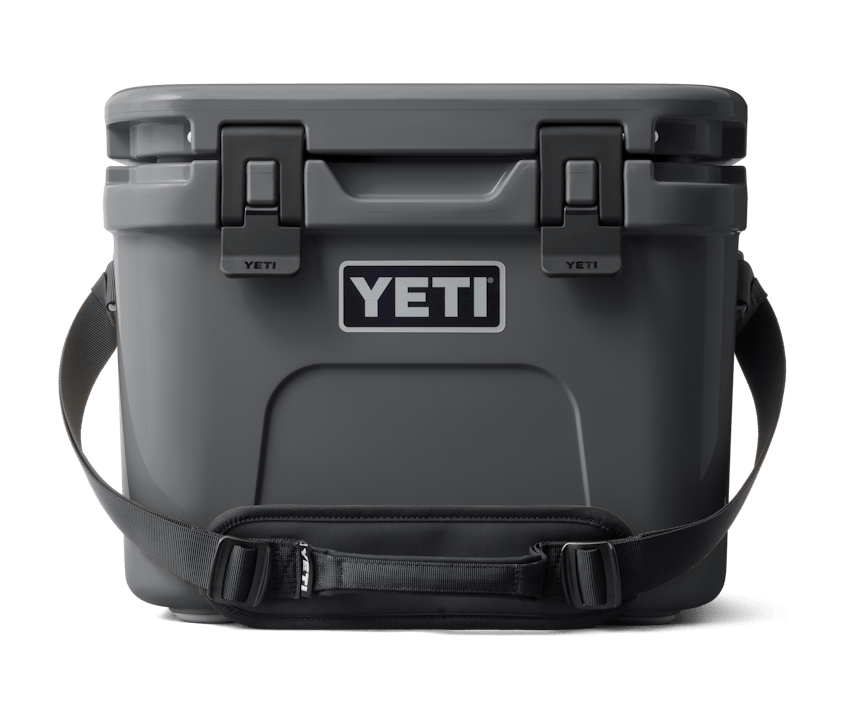
The YETI Roadie 15 is designed for people who prioritize portability, build quality and premium construction.
YETI describes it as one of its most compact hard coolers. It holds up to 22 cans or 16 pounds of ice and weighs approximately 9.6 pounds empty.
Its compact footprint also makes it suitable for places where larger coolers become inconvenient, including vehicles, boats and outdoor gear setups.
Key Features
- 15-quart capacity
- Holds up to 22 cans
- Holds up to 16 lbs of ice
- Approximately 9.6 lbs empty
- Double-duty shoulder strap
- Quick-access latch
- Leak-resistant drain plug
- Strong hard-sided construction
Why We Like It
Portability is the Roadie 15’s biggest strength.
OutdoorGearLab’s 2026 testing gave it an especially strong score for moving and lifting, describing it as exceptionally portable and comfortable to carry.
The adjustable shoulder strap is particularly useful when you’re walking from the car to a beach, park, campsite or fishing location.
Potential Drawbacks
The biggest compromise is interior space relative to its price.
At around $200 list price, it’s substantially more expensive than basic compact coolers. OutdoorGearLab also found its usable interior relatively limited.
Best For
Best for buyers who value premium construction and easy carrying over maximum capacity or low price.
3. Coleman Chiller 16-Quart — Best Budget Small Cooler
If affordability is your priority, the Coleman Chiller 16-Quart is one of the most straightforward choices.
Its simple design makes it suitable for everyday uses such as work lunches, short road trips, sporting events, picnics and casual outdoor activities.
Current retail listings put the model around the mid-$20 range, although pricing varies by retailer.
Key Features
- 16-quart capacity
- TempLock insulation
- Large-grip carrying handle
- Hard-sided construction
- Easy-clean top
- Compact footprint
Why We Like It
The appeal is simple: you don’t have to spend a lot to get a useful small cooler.
It’s lightweight enough for everyday transportation and provides enough room for a personal lunch, drinks and snacks.
For occasional users, that can make more sense than spending $100–$200 on a premium cooler.
Potential Drawbacks
The Coleman doesn’t offer the same premium construction or advanced features found on higher-end coolers.
It is better suited to everyday and short-duration use than demanding multi-day adventures.
Best For
Best for budget-conscious shoppers who want a simple, practical cooler for everyday use.
4. Titan Arctic Zone 24-Can Zipperless Cooler — Best Soft Cooler
Not everyone wants a rigid cooler.
The Titan Arctic Zone 24-Can Zipperless Soft Cooler is designed for shoppers who prefer a flexible cooler that’s easy to carry and convenient to access.
The current product listing describes a 16-quart soft-sided design capable of holding up to 24 cans, with a zipperless opening for easier access.
Key Features
- 16-quart capacity
- Up to 24-can capacity
- Soft-sided construction
- Zipperless opening
- Flexible design
- Suitable for lunches, road trips and outdoor activities
Why We Like It
The biggest advantage of a soft cooler is flexibility.
When empty, it generally takes up less storage space than a rigid cooler. It’s also easier to carry when you’re walking longer distances.
For beach trips, sporting events, picnics and large lunches, this style can be extremely convenient.
Potential Drawbacks
A soft cooler doesn’t provide the same rigid protection as a hard-sided model.
If you’re transporting fragile food containers or need maximum structural durability, a hard cooler may be preferable.
Best For
Best for shoppers who prioritize flexibility, portability and easy access.
5. Stanley 16-Quart Cooler — Best Rugged Design
The Stanley 16-Quart Cooler is another compact hard-sided option for shoppers who want a more rugged design.
The current listing describes a 16-quart cooler with a lightweight construction, leak-resistant design and additional insulation compared with typical coolers.
Key Features
- 16-quart capacity
- Hard-sided construction
- Leak-resistant design
- Lightweight construction
- Rugged outdoor-oriented build
- Suitable for day trips and outdoor events
Why We Like It
Stanley’s approach focuses heavily on durability and outdoor usability.
It’s a good middle-ground option for shoppers who don’t want a basic entry-level cooler but also don’t necessarily want to spend $200 on a premium model.
Potential Drawbacks
It costs more than basic compact coolers such as the Coleman Chiller.
For someone who only needs a cooler for occasional lunches, the additional cost may not be necessary.
Best For
Best for shoppers looking for a durable, compact cooler with a more premium outdoor-oriented design.
Small Cooler Comparison: What Really Matters?
Choosing a cooler isn’t simply about picking the largest capacity.
Several factors can have a bigger impact on your experience.
Portability
If you’ll be carrying your cooler more than a few hundred feet, weight and carrying design matter.
A shoulder strap can make a significant difference, especially with hard-sided coolers.
The YETI Roadie 15 and RTIC Ultra-Light 22 both emphasize portability in their designs.
Capacity
Consider what you actually need to carry.
For one person, a 10–15 quart cooler may be enough.
For two or three people, moving toward 16–22 quarts can provide considerably more flexibility.
Buying a cooler that’s too large can simply add unnecessary weight.
Insulation
Insulation affects how long the cooler can maintain a cold interior.
However, actual performance depends on several factors, including:
- Amount of ice
- Outside temperature
- How frequently the cooler is opened
- Temperature of the food before packing
- Cooler placement
- Available internal space
This means manufacturer ice-retention claims shouldn’t be treated as guaranteed real-world results.
Hard vs. Soft Construction
Hard Coolers
Advantages:
- Better structural protection
- Rigid interior
- Generally easier to organize
- Good for outdoor use
- Better protection for fragile items
Best for: Road trips, camping, fishing and regular outdoor use.
Soft Coolers
Advantages:
- Flexible
- Usually easier to carry
- Easier to store
- Convenient for lunches and day trips
- Often include additional pockets
Best for: Work, beach trips, sports events, picnics and short outings.
How Much Should You Spend on a Small Cooler?
Small coolers can range from roughly $20 to $200 or more, depending on construction and brand.
For example, current listings show the Coleman Chiller 16-Quart around $25–$30, the RTIC Ultra-Light 22 around $139, and the YETI Roadie 15 around $200.
That doesn’t mean the $200 cooler is automatically ten times better than a $20–$30 cooler.
Instead, you’re paying for differences in materials, construction, portability, features and brand positioning.
A practical way to think about it:
Under $40:
Good for lunches, picnics and occasional day trips.
$40–$100:
More features, better construction and more soft/hard options.
$100+:
Premium materials, stronger construction and specialized performance.
What Size Small Cooler Should You Buy?
The ideal size depends on your typical use.
For One Person
A compact 10–15 quart cooler can be enough for lunch, drinks and snacks.
For Two People
A 15–22 quart cooler provides more flexibility without becoming excessively bulky.
For Beach or Day Trips
A 16–22 quart model is often a practical middle ground.
For Longer Outdoor Trips
Consider moving beyond the traditional “small cooler” category if you need food and drinks for multiple days.
The key is to avoid buying capacity you won’t actually use.
How to Keep a Small Cooler Cold Longer
Even a well-insulated cooler can perform poorly if it’s packed incorrectly.
1. Pre-Chill the Contents
Put drinks and food in the refrigerator before packing whenever possible.
2. Pre-Chill the Cooler
Cooling the interior before loading can reduce the initial temperature increase.
3. Use Enough Ice
Ice should be sufficient to surround the items you’re trying to keep cold.
4. Keep the Cooler in the Shade
Direct sunlight can significantly increase the external temperature of the cooler.
5. Avoid Unnecessary Opening
Every time you open the lid, cold air escapes.
6. Organize Before You Leave
Know where your drinks, food and snacks are before opening the cooler.
This helps minimize the amount of time the lid remains open.
Which Small Cooler Is Best for You?
| If You Want… | Our Pick |
|---|---|
| Best compact hard cooler | RTIC Ultra-Light 22 |
| Best premium option | YETI Roadie 15 |
| Best budget option | Coleman Chiller 16-Quart |
| Best soft cooler | Titan Arctic Zone 24-Can |
| Best rugged design | Stanley 16-Quart |
Frequently Asked Questions
What is the best small cooler in 2026?
For a compact hard cooler, the RTIC Ultra-Light 22 is one of the strongest options to consider. OutdoorGearLab specifically selected it as its Best Compact Hard Cooler in its 2026 testing.
Is the YETI Roadie 15 worth the money?
It can be worth considering if portability, premium construction and durability are priorities. Its main disadvantage is the relatively high price compared with its limited interior capacity.
What is a good inexpensive small cooler?
The Coleman Chiller 16-Quart is a practical budget option. Current listings put it around the mid-$20 range, although prices vary.
Are soft coolers better than hard coolers?
Neither is universally better. Soft coolers are generally easier to carry and store, while hard coolers offer more rigid protection and structure.
What size cooler is best for one person?
For a single person, approximately 10–15 quarts can be enough for a lunch and drinks. If you’re planning a full day outdoors, moving closer to 15–22 quarts can provide additional flexibility.
Can a small cooler be used for camping?
Yes. Small coolers can work well for short camping trips or personal food and drinks. For multi-day trips or groups, a larger cooler may be more appropriate.
How long will a small cooler stay cold?
There is no universal answer. Cooling performance depends on insulation, ice quantity, ambient temperature, contents and how often the cooler is opened. Independent testing can provide useful comparisons, but actual results vary by conditions.
Final Verdict
The best small cooler isn’t necessarily the biggest, most expensive or most heavily insulated model.
The right choice depends on how much you carry, how far you need to transport it, how often you use it and how much you’re comfortable spending.
For shoppers looking for a balanced compact hard cooler, the RTIC Ultra-Light 22 is a particularly compelling option. It combines a useful 22-quart capacity with a relatively portable design and is currently recognized by independent testing as a top compact hard cooler.
For premium buyers, the YETI Roadie 15 stands out for its portability, construction and comfortable carrying system.
For shoppers who simply want an affordable cooler for everyday use, the Coleman Chiller 16-Quart offers a much lower entry price while still providing a practical hard-sided design.
Ultimately, choose the model that fits your actual needs rather than paying for capacity or features you won’t use.
Smart shopping starts with choosing the right size, the right design and the right features for the way you plan to use your cooler.
Affiliate Disclosure
Smart Deals Path may participate in affiliate programs. Some links in this article may be affiliate links, which means we may earn a commission from qualifying purchases made through those links, at no additional cost to you.
Prices, specifications, availability and promotions can change at any time. Please verify the latest information directly with the retailer or manufacturer before purchasing.